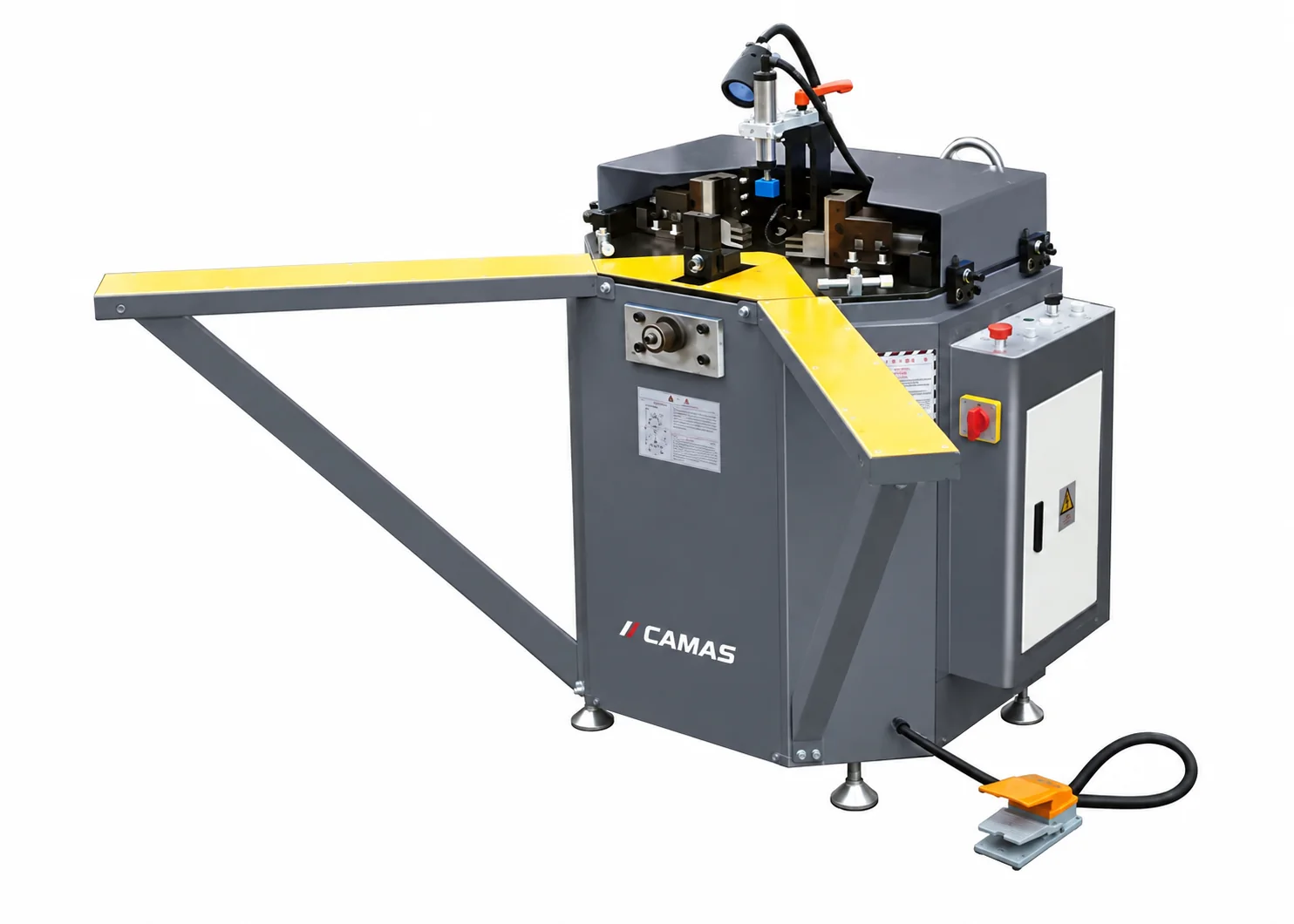
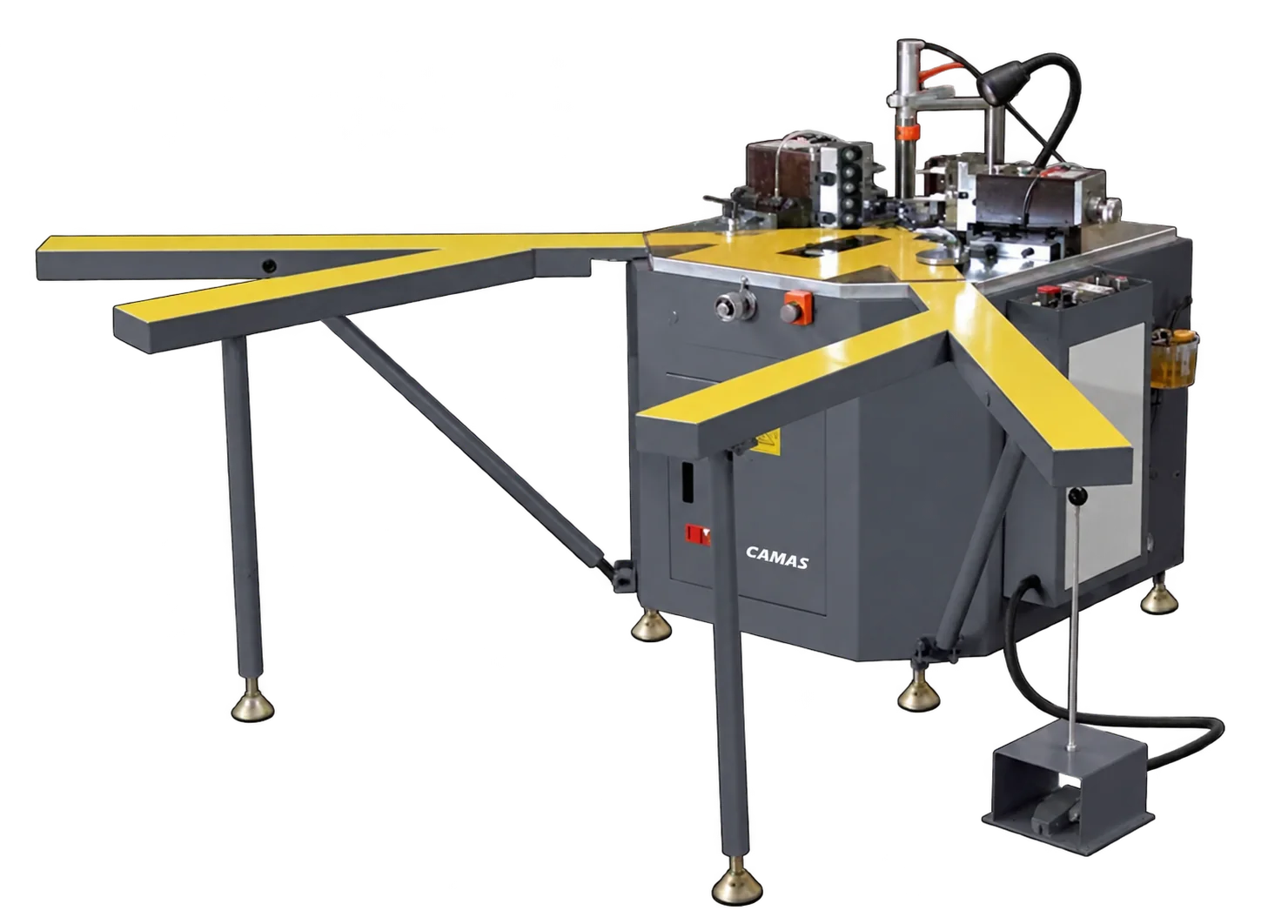
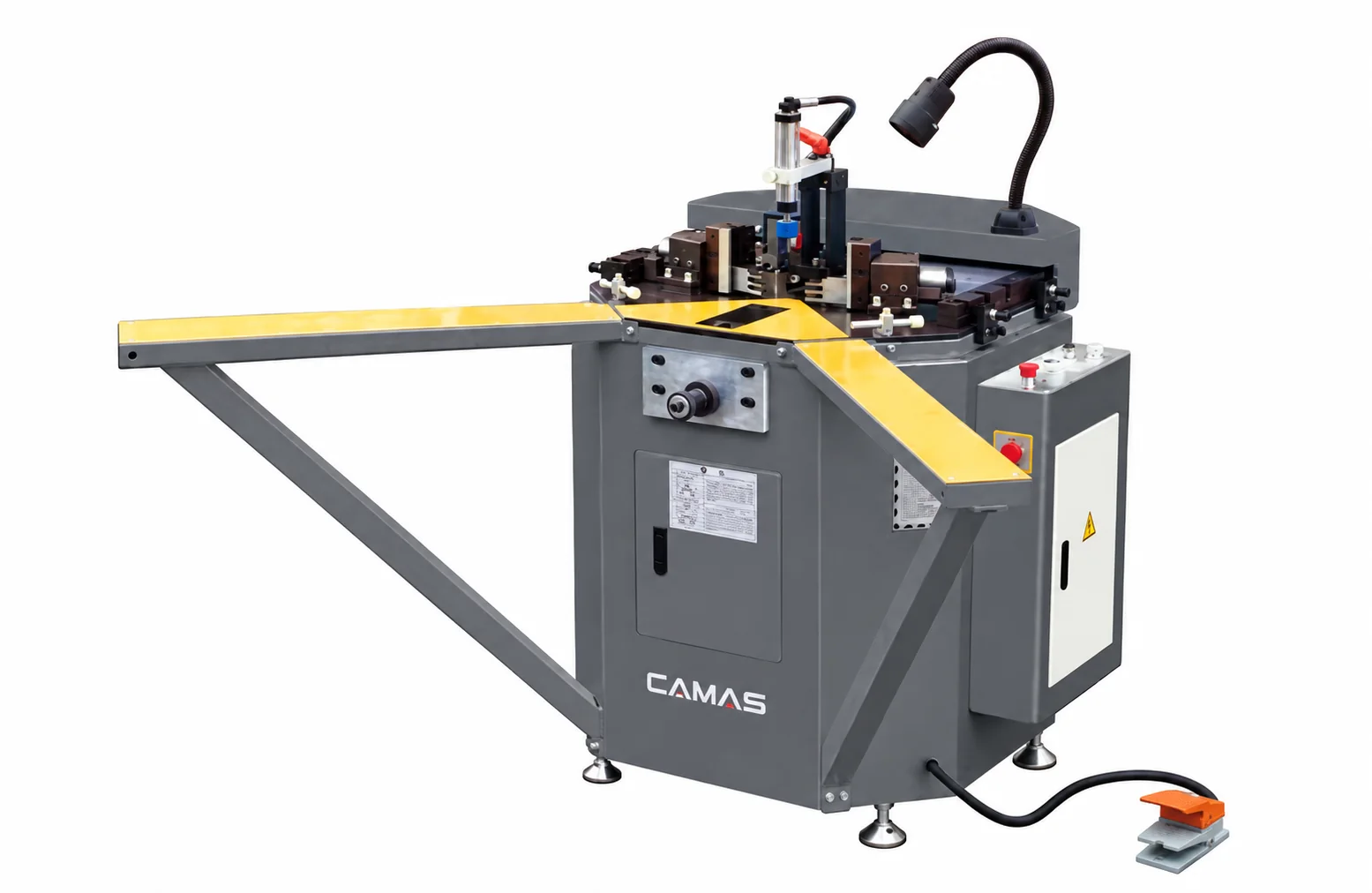
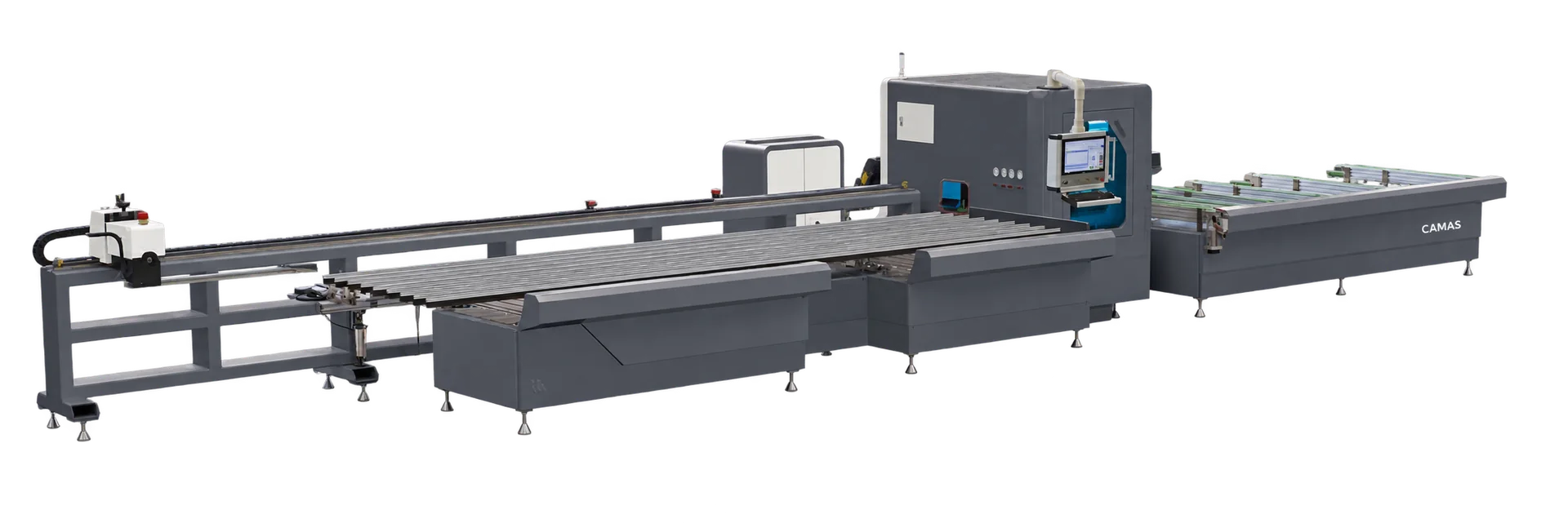
The LMB-120 is part of the CAMAS aluminum profile equipment range. Final configuration and tooling are matched to your application.
01 / THE APPLICATION
Corner assembly around the profile and connector
Join aluminum frame corners with synchronized hydraulic tooling.
Mechanical corner crimping depends on the profile, corner connector and knife contact positions. Review profile height and adjustment access along with the hydraulic configuration.
Corner assembly
Synchronized hydraulic action
Application-led configuration
Define your tools and working requirements from the component drawing.
02 / TECHNICAL OVERVIEW
LMB-120 specifications
CAMAS LMB-120 technical specifications
Equipment line
Aluminum Profile Machinery
Model
CAMAS LMB-120
Profile height
90 mm
Extrusion force
48 kN
Rated oil pressure
15 MPa
Angle cylinder stroke
85 mm
Positioning block adjustment
54 mm
Motor power
1.5 kW
Machine weight
Approx. 340 kg
Process
Corner assembly
Specifications support preliminary selection. Capacity varies with profile geometry, cutting angle, tooling and clamping. Values marked “to be confirmed” are not published in the source data. Confirm the supplied configuration in your quotation.
Published model data and the checks to resolve in your quotation.
Published machine configuration
Join aluminum frame corners with synchronized hydraulic tooling.
Configuration details
Positioning block adjustment: 54 mm · Extrusion force: 48 kN
Tooling to define in your quotation
Match the crimping knives, inner locator and corner connector to the profile system. Identify the adjustment range needed when changing between sections.
Supply and site requirements
State voltage, phase and frequency, control requirements and destination. Ask the quotation to distinguish included equipment, options, packing, documentation and installation or training arrangements.
What to include with your drawing
Profile section, material and stock length
Finished-part drawing, angles and critical dimensions
Production quantity and current process
Electrical supply, tooling and workshop requirements
For a machine review, include the sample operation, critical feature and finish you want to check. Ask CAMAS for model-specific footage or sample details when requesting your configuration.
Will the corner crimper fit my window profile system?
Provide the frame and corner-connector drawings, profile height and intended crimping positions. Compatibility depends on joint geometry and knife setup; hydraulic force alone does not establish a suitable joint.
How do I know this configuration fits my part?
Send the finished-part drawing, material, dimensions and quantity. Review tooling access, working capacity and handling together before selecting the configuration.
What tools are included?
The agreed quotation defines the supplied blades, dies, cutters, gauges and accessories. Include your required holes, angles and features so the tool package can be itemized.
Can I specify the electrical supply?
Include voltage, phase and frequency in your inquiry. Electrical variations and control requirements should be confirmed for the specific configuration.
How are delivery and support arranged?
Delivery timing, packing, installation, training and spare-parts scope are agreed for the project. Share the destination and your site requirements when requesting a quotation.